Conception calculator
Estimate when you conceived from a due date, last period or pregnancy record with this conception calculator.
How does the conception calculator use my record?
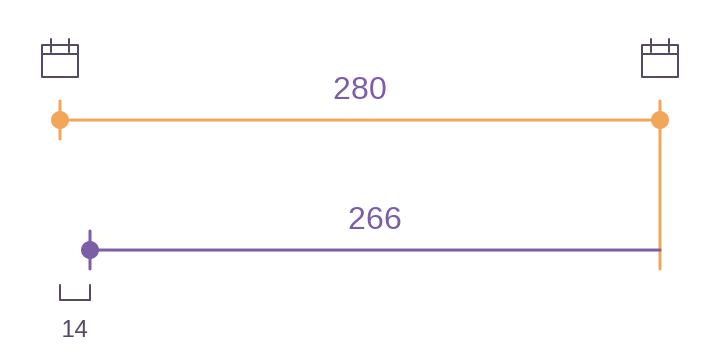
I first check what the date describes: a due date, a birth, a scan or an embryo transfer. Each one needs its own calculation. This conception calculator shows the source beside the estimated conception date, followed by the day count, calculated due date and completed gestational weeks for a reference date you choose. Keeping those values together makes it easier to spot a wrong method or a mistyped age before you copy the answer.
For pregnancy dating, conception means a fertilization-equivalent date. With a frozen embryo transfer, subtracting the embryo’s developmental age gives the equivalent date on the pregnancy calendar. The original laboratory fertilization happened before storage; that date stays in the treatment record. Use the dating equivalent when comparing pregnancy weeks, and keep the laboratory record when you need the actual event date.
How is conception calculated from each type of date?
Use Due date when you already have an estimated date in a clinical record. Use Last period for the first day of bleeding and a usual cycle length. Ultrasound report requires the scan date and the completed gestational weeks and extra days on that report; the tool does not read an image or infer age from measurements. IVF transfer needs the transfer date and developmental embryo age. Conception estimate preserves a date you already have.
Birth record is a separate mode because an actual birthday is not an estimated due date. It requires the gestational age recorded at birth. A baby born at 36 completed weeks cannot be treated as though the birth happened at 40 weeks. If that information is missing, the calculator returns an error rather than quietly subtracting 266 days. I would leave an uncertain question unanswered rather than manufacture a precise-looking date.
| Your information | Fertilization-equivalent estimate | Assumption |
|---|---|---|
| Due date | Date − 266 days | Reverse a 38-week dating interval |
| Last period | First day + cycle length − 14 days | Approximate regular-cycle adjustment |
| Ultrasound report | Scan − (7 × weeks + days) + 14 days | Use recorded gestational age |
| IVF transfer | Transfer − embryo age | Developmental age, not storage time |
| Conception estimate | Entered date unchanged | The tool does not validate its clinical origin |
| Birth record | Birth − (7 × weeks + days) + 14 days | Recorded birth age is required |
How many weeks pregnant am I on a chosen date?
The derived dating origin is the central estimate minus 14 calendar days. It is a calculation reference, not necessarily the first day of a real period. Completed gestational weeks come from elapsed calendar days since that origin: whole groups of seven are weeks, and the remainder is extra days. After 97 days the display is 13 weeks + 6 days; after 98 it is 14 weeks + 0 days. The tool does not round the remainder into a week.
The reference date initially uses your current local calendar day. Birth record instead uses the date of birth, so the displayed weeks match the recorded age; a reference date you edit is kept. Beyond 42 weeks + 6 days, the label changes to calendar weeks since the dating origin, rather than describing an ongoing pregnancy. Change it to inspect a historical or future date without changing the conception estimate. A reference before the derived origin gets an explicit message instead of negative pregnancy weeks. The implied due date is always central estimate plus 266 days, so its derived gestational count is 40 weeks + 0 days. That identity checks the calendar convention; it does not predict the day of birth. The reverse due-date method uses a fixed 40-week gestational convention; it does not change or replace the due date assigned by your clinician.
Can intercourse happen before the conception date?
The estimated intercourse window appears automatically for all modes except IVF. It covers the five days before the central estimate through that estimate: six calendar dates in total. Sperm can remain viable for several days, so sex and fertilization can fall on different days. For a central estimate on day 15 of a month, the window runs from day 10 through day 15, including both endpoints.
ASRM’s fertile-window definition uses the six days ending on ovulation. Here the calculated conception date stands in for approximate ovulation; an earlier or later actual ovulation shifts the whole window. Read this separately from the optional date range you choose below. IVF uses embryo development instead of an intercourse window.
What does the optional date range mean?
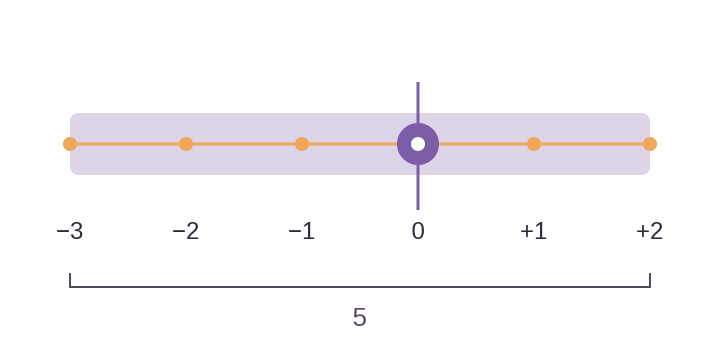
The optional range starts with zero days earlier and zero days later. You can choose whole offsets from zero to 21 days on each side. They define a scenario that you choose, not a measured fertile window or a clinical confidence interval. The shaded timeline gives no probability to any day. Three days earlier and two later produce five days between the endpoints, containing six calendar dates when both endpoints are included.
The central marker is placed in proportion to your chosen offsets. An asymmetric range therefore does not automatically put it in the middle. The date strip repeats all three values in readable text, so you do not need to infer dates from a graphic. A separate optional conception estimate shows other minus this estimate in signed days. It never changes either input, chooses a winner or averages the two dates.
How are calendar days and pregnancy weeks counted?
I check day counts directly, including leap days and daylight-saving changes. The model treats inputs as civil calendar dates, so a 23-hour or 25-hour local-clock interval cannot silently become zero or two calendar days. Invalid dates are rejected rather than normalized into the next month. Cycle length must be a whole value from 20 to 45; recorded age is two to 42 completed weeks with zero to six extra days; supported embryo ages are three, five and six days. These are software input bounds, not clinical definitions.
Missing required numbers are errors. The tool does not turn a blank ultrasound age into a standard pregnancy week, truncate a fractional cycle or clamp seven extra days to six. Only the fields used by the selected method are validated. When you edit an input, the previous output is cleared until calculation succeeds again. This prevents an old answer from appearing to describe newly edited information.
| Input relationship | Expected result |
|---|---|
| Period plus 28 − 14 | 14 days after the first day |
| Period plus 35 − 14 | 21 days after the first day |
| Birth at 36 weeks + 0 days | 238 days before the birth |
| Scan at 8 weeks + 3 days | 45 days before the scan |
| Transfer of a day-5 embryo | 5 days before transfer |
| 97 days from derived origin | 13 weeks + 6 days |
How can I copy or save my result?
Copy result and Download text report preserve the method, source date, signed arithmetic, age inputs, chosen range and limitations. If automatic clipboard access fails, a visible text field lets you select the same report manually. Printing uses your browser. The optional checkpoint table lists 43 derived week starts from zero through 42 completed weeks. They are date-only reference points, not scan appointments, screening instructions or treatment recommendations.
Nothing is saved automatically and the calculation sends no inputs to a server. Advertising or analytics elsewhere on the website are described separately; the tool input area is masked. A downloaded report or copied text is under your control, including where you later share it. Reset clears the current inputs and output. The labelled example remains labelled in its report so it cannot quietly become a personal pregnancy record. Press Enter to calculate, or use Ctrl or Command + Enter as a shortcut. Escape keeps your inputs and result.
Can conception dates prove paternity?
An estimated date cannot prove paternity, confirm pregnancy, identify the exact day of intercourse or provide contraception. Uncertainty in the source is still present after subtraction. A calculator does not make a rough period history exact or replace a clinician’s assigned dating. These pages provide general information, not diagnosis or medical advice.
The Mayo Clinic dating explanation distinguishes conception timing from the gestational calendar. The Royal Hospital for Women procedure explains source-dependent dating. Read due date versus birth record and date accuracy and limits for worked reasoning.
Questions about the dates
Can a birthday alone give the conception date?
No. Birth record mode also needs the recorded gestational age; it does not assume every birth happened at 40 weeks.
Is the chosen range a fertile window?
No. It displays optional offsets you choose, not biological measurements, probabilities or a clinical confidence interval.
Does IVF mode give the original fertilization date?
It subtracts developmental embryo age from transfer. For frozen embryos the output is a dating equivalent, not necessarily the original laboratory day.
Can I use this to establish paternity?
No. Calendar estimates cannot prove paternity or identify a particular act of intercourse.
Are dates stored or sent?
The calculation sends no inputs to a server and saves nothing automatically. Copying, printing and downloading are optional actions.
Understand conception dates
 Conception from a due date or birth date: choose the right informationStart from the right record and keep its age notation with the answer.5 min read
 Conception date accuracy: assumptions, ranges and limitsRead scenarios without turning them into probabilities or parentage claims.6 min read
 Conception from your last period: cycle length and countingCount from the first day of bleeding, adjust the cycle length and read the six-day window.5 min read
Updated